Water Lily
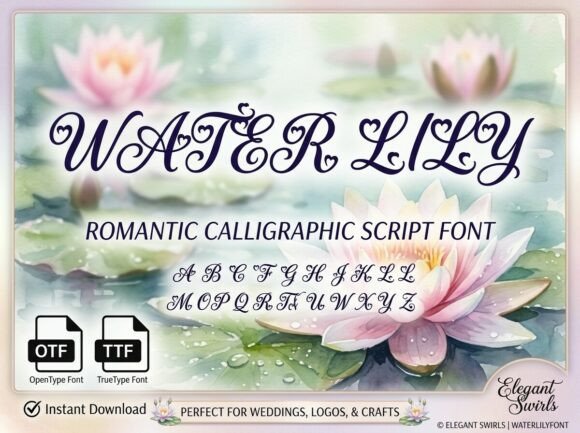
The first time I saw Water Lily, it felt like stepping into a quiet garden at dawn. The letters flow with a natural grace, each stroke carrying the softness of petals and the elegance of a morning breeze. It’s not just a font—it’s a mood, a visual language that whispers sophistication and charm. Water Lily belongs to the Script Amp family, and its presence in a design project can elevate the overall aesthetic with a touch of refinement.
Water Lily is best suited for projects that require a sense of elegance, creativity, and a touch of femininity. Its script style is fluid and organic, making it ideal for branding, editorial design, and creative packaging. It has a certain warmth that makes it feel personal and inviting, which aligns well with lifestyle brands, fashion labels, and boutique businesses looking to convey a sense of artistry.
In real-life design scenarios, Water Lily shines in logo design where a unique typeface can make a brand stand out. When paired with a sans serif or serif font, it adds contrast and visual interest without overwhelming the composition. I’ve used it on product labels and packaging designs, where its flowing nature complements the curves of handmade goods and luxury items. It also works well in social media graphics, where a decorative yet readable font can capture attention without sacrificing clarity.
However, Water Lily is not a font for every situation. It should be used carefully in large headlines or short phrases where readability is paramount. While it looks beautiful in display settings, its intricate details can sometimes reduce legibility at smaller sizes. For instance, when testing it on a website header, I noticed that the thin strokes could become difficult to read on low-resolution screens. This makes it essential to test the font in black and white and at various sizes before finalizing its use in a design.
Readability is a key factor when considering Water Lily. In print, it performs admirably on high-quality paper, but in digital formats, especially on mobile devices, it requires careful consideration. I recommend using it as a headline font rather than body text, and ensuring it’s paired with a strong sans serif or serif font for supporting content. This creates a balanced hierarchy that guides the viewer’s eye through the design effectively.
When it comes to brand identity, Water Lily can help create a cohesive visual language. Its elegant structure supports a premium feel, which is why it’s often used in branding for lifestyle, beauty, and wellness companies. However, it’s important to maintain consistency across all design assets. A brand mark that uses Water Lily should be complemented by other fonts that reinforce the same tone and personality.
For editorial design, Water Lily brings a level of sophistication that fits well with magazines, brochures, and book covers. It pairs beautifully with serif fonts like Georgia or Cinzel, creating a classic yet modern look. In web design, it’s best used in headers and call-to-action buttons, where its decorative qualities can enhance user engagement without compromising usability.
One of the most valuable aspects of Water Lily is its versatility. It can transition seamlessly from digital products to printable designs, making it a great choice for creators who work across multiple platforms. Whether it's a Canva template, a Cricut project, or a custom font pack, Water Lily maintains its character while adapting to different mediums.
I’ve also found that Water Lily works exceptionally well in combination with other fonts. Pairing it with a bold sans serif font like Montserrat or a clean serif like Playfair Display creates a striking contrast that highlights its ornate features. This kind of font pairing is essential in maintaining visual harmony and ensuring that the design remains accessible to a wide audience.
Before using Water Lily commercially, it’s crucial to confirm the commercial licensing terms. As a premium font, it offers a range of usage rights, but understanding these details ensures that your design assets are legally protected. Always review the license agreement to avoid any potential issues with client or business use.
In summary, Water Lily is a creative font that brings elegance and personality to a variety of design projects. It’s not just a tool for designers—it’s an extension of the brand’s voice. Whether you're working on a logo, a poster, or a digital ad, Water Lily can add a unique touch that enhances both aesthetics and functionality. With thoughtful application and proper pairing, it can become a staple in your design toolkit.